
Archive: This article was first published in 2023. It reflects the state of knowledge, product names and wording of that time. Current, product-specific information can be found on the respective product pages.
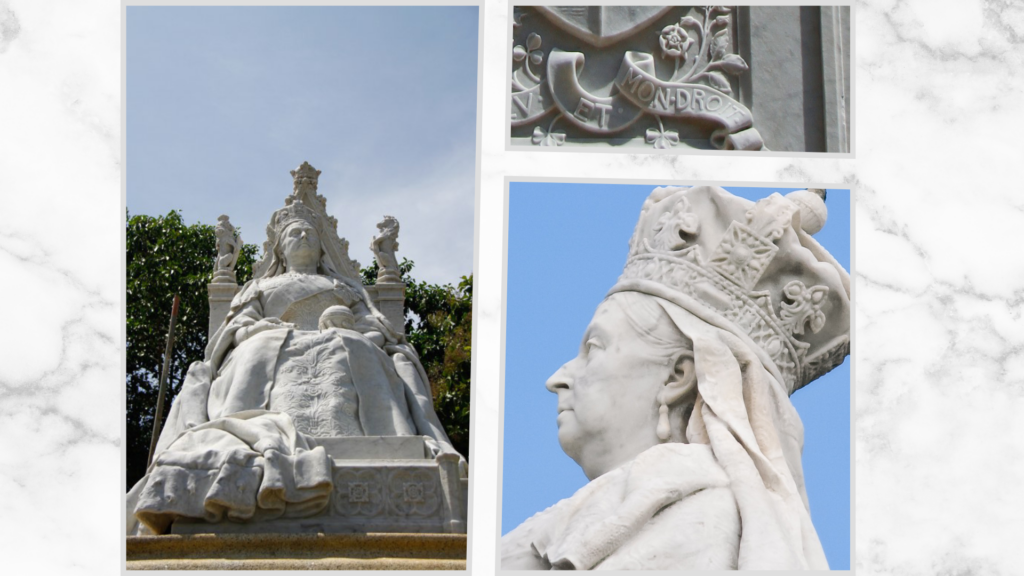
Monuments are not only historical masterpieces but also significant testimonies of past cultures. Preserving such monuments is crucial to safeguarding their beauty and history for generations to come. In recent decades, NP® refinement has been used as a technology for protecting monuments against environmental influences, dirt, moss, algae and much more. An impressive example of this technology in use is the Queen Victoria statue in Colombo, Sri Lanka, which has been treated with NP® refinement since 2013.
The challenges of monument conservation: Historical monuments face numerous challenges, especially when they are located in different climate zones. From extreme heat and solar radiation to heavy rainfall and air pollution, monuments must withstand the most varied environmental conditions. These factors can severely damage the surfaces of monuments and accelerate their decay.
The failed attempt at overpainting: The Queen Victoria statue in Colombo, erected in 1897, was no exception. Over time, various protective approaches were tried to save the monument from damage. One unsuccessful attempt was to paint the statue over with white paint. Unfortunately, this approach proved ineffective, as it could not provide the desired protection and concealed the beauty of the marble.
The breakthrough: NP® refinement: Under the professional supervision of monument conservator Kamal Zoysa, NP® refinement was finally applied to the Queen Victoria statue. NP®, an innovative technology developed specifically for the protection of marble surfaces, proved to be the breakthrough in this conservation project. This refinement forms an invisible protective layer on the surface of the monument that is designed to ward off a multitude of threats.
Experience from practice: Since 2013, NP® refinement has been protecting the Queen Victoria statue against environmental influences, dirt, moss and algae. According to the project experience, the marble surface has required no costly rework since then.
Suitability of NP® refinement in different climate zones: What makes NP® refinement particularly remarkable is its suitability for different climate zones. From tropical to temperate climates, this technology can be applied to monuments worldwide. It is designed to protect against the effects of humidity, heavy rainfall and air pollution; suitability must be assessed for each monument and substrate. Through its versatile application, NP® refinement can help improve the preservation of monuments on a global scale.
Conclusion: Protecting monuments is of immense importance for preserving the history and culture of a society. NP® refinement is a technology designed to protect monuments against the diverse threats in different climate zones. The example of the Queen Victoria statue in Colombo, Sri Lanka, shows the potential of this technology. With NP® refinement, monuments can be given long-lasting protection – depending on the substrate and exposure.