
Archive: This article was first published in 2023. It reflects the state of knowledge, product names and wording of that time. Current, product-specific information can be found on the respective product pages. Results of individual studies relate to the investigated surfaces, product variants and conditions and do not constitute clinical evidence that infections are prevented.
A major supermarket chain tests liquid glass from Nanopool on contact surfaces
Italy/Germany 2022
When gingerbread and autumn decorations arrive in the supermarkets, the cooler, damper weather marks the start of the high season for many viral illnesses. A major retail chain is now testing the coating technology Bacterlon® on contact surfaces as an addition to its hygiene measures.
When staff absences due to coronavirus and flu illnesses push companies to their limits and customers once again reduce their time in stores to the bare minimum, additional hygiene measures are in demand. Alongside protection through face coverings, contact surfaces also play a central role. However, intensified cleaning and disinfection cycles tie up valuable resources in a time-consuming and costly way, because the constantly repeated cleaning and disinfecting of contact surfaces is a textbook Sisyphean task: renewed colonization and spread of germs is possible at any time, especially during the autumn/winter virus season.
A major supermarket chain in Europe has therefore started a pilot application focusing on contact surfaces: the aim is to reduce the adhesion of microorganisms on surfaces with an ultra-thin functional layer developed by the German family-owned company Nanopool.
The coating Bacterlon® is designed to give surfaces repellent properties and to reduce the adhesion of dirt and germs. Bacterlon® does not replace prescribed cleaning, disinfection and hygiene measures.
Results of the pilot application
In a first step, test surfaces in a store of the European food retailer were coated with Bacterlon®. Those responsible at the retail chain had the relevant areas tested for bacteria using contact plate tests both before and after the treatment. An independent laboratory found that the detectable germ count was not only many times lower after the treatment than before, but that it had even dropped significantly again around six weeks after coating. In the contact plate tests, the detected bacterial count on the treated test surfaces was up to 99% lower. The results relate to the tested surfaces and the investigation period.
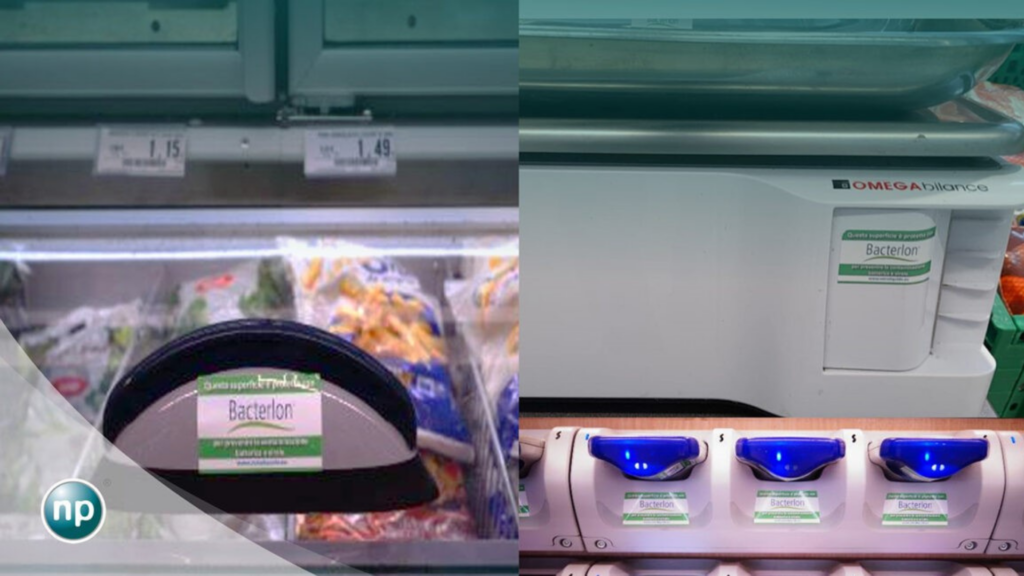
Following these positive results, the supermarket chain decided to extend the treatment across large areas of the pilot store: all shopping cart handles, but also portable product scanners, refrigerator handles, touchscreen self-checkout terminals, the fruit and vegetable scale, the PVC butchery door in the staff area, as well as tables, the beverage dispenser and the microwave in the public refreshment area are now coated with Bacterlon®.
Transparency for customers
The supermarket has equipped all treated surfaces with information notices about the hygiene treatment with Bacterlon®.
Further information on Bacterlon®: https://www.nanopool.eu/bacterlon/
For further questions about the wide range of possible applications of the NP® protective coating, the company, based in Schwalbach/Germany, will be happy to assist: info@nanopool.eu
About the company:
nanopool® GmbH, based in Hülzweiler, is an innovative family-owned company. Since 2002, it has been among the companies working with nanotechnology in the field of surface refinement.
nanopool® has succeeded in developing a surface refinement for almost every field of application. This innovation can positively change working life in a wide variety of ways.
Selected properties of nanopool® products have been examined by recognised research laboratories; all statements apply only to the tested products and test conditions.
Press contact:
info@nanopool.eu