

Sustainable Truck Cleaning in Fleet Management: Clean Vehicles – Even After Three Years
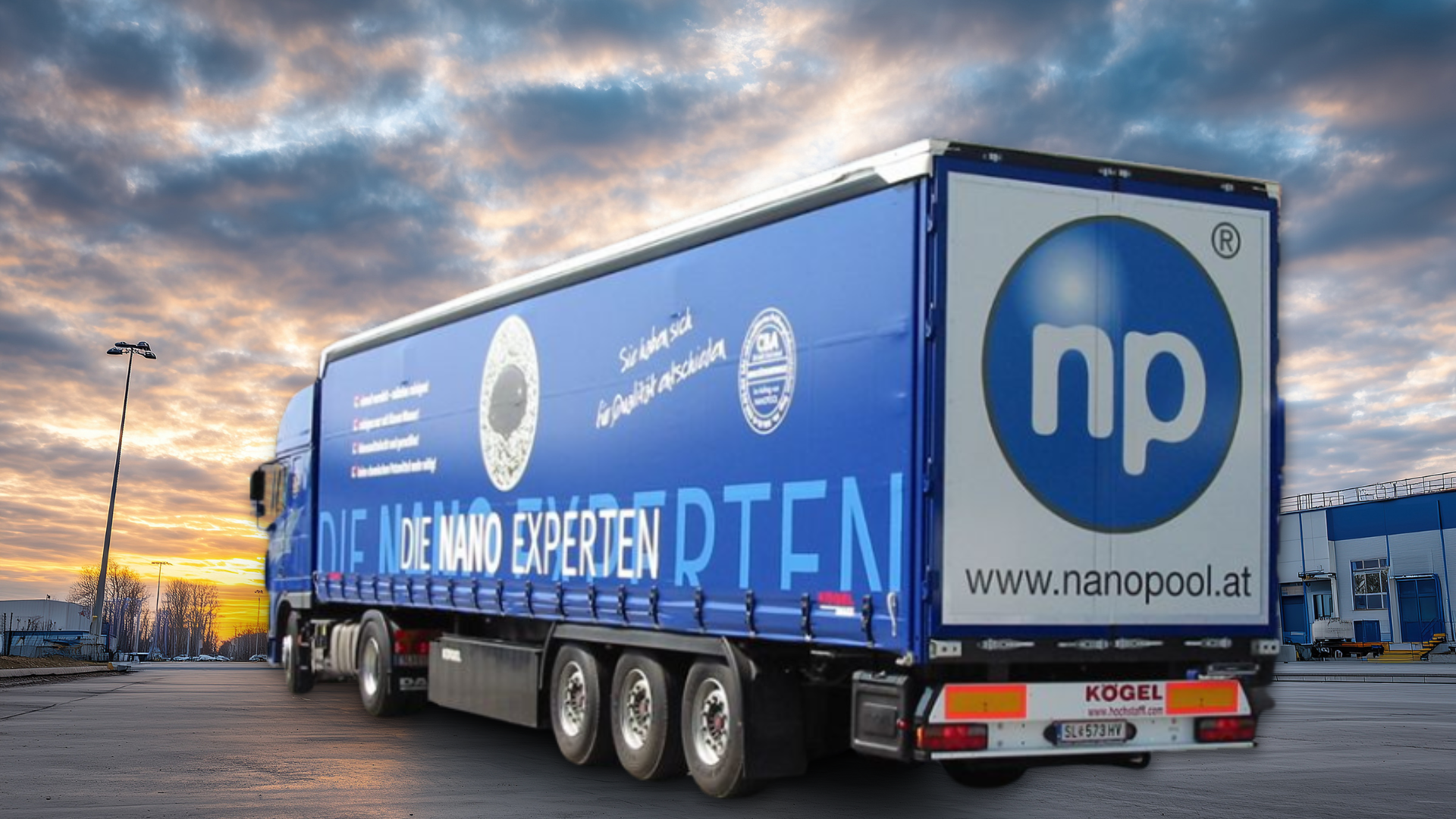
“Our truck looks exactly as shown in the photo during daily operations – not just immediately after washing. Even after three years, we clean our vehicles predominantly with plain water. In many cases, rainfall alone is sufficient to rinse dirt from the treated surfaces.
For us as a logistics company, this is not merely a side effect, but a decisive economic and organisational advantage,” says a customer from the logistics sector.
Initial Situation: High Cleaning Effort in Daily Logistics Operations
Trucks are exposed to extreme conditions all year round:
- Road salt in winter
- Road dirt and fine particulates
- Industrial deposits
- Oil and diesel residues
- Weather exposure
Tarpaulins, superstructures and driver cabs in particular quickly show heavy soiling.
Without suitable protective measures, this leads to:
- Frequent cleaning intervals
- High water consumption
- Regular use of chemical cleaning agents
- Additional labour time
In a larger fleet, these factors accumulate considerably.
Technical Approach: Surface Treatment with Long-Term Effect
Treating the exterior surfaces creates a modified surface structure that significantly reduces the adhesion of dirt particles.
The physical effect ensures that
- dirt penetrates less deeply into pores
- deposits develop reduced adhesion
- water can rinse away contamination more easily
The practical result in everyday operations:
Cleaning is carried out predominantly with plain water. Chemical cleaners are only required for exceptional heavy soiling.
Decisive Added Value: Consistent Performance Over Three Years
Of particular relevance to us is the long-term performance.
After three years of regular use – including winter operation – we have not observed any noticeable reduction in protective performance. Cleaning continues to require minimal effort.
For fleet management, this means:
- Permanently reduced cleaning times
- Lower consumption of cleaning agents
- Water savings
- Reduced material stress on surfaces
Especially across multiple vehicles, this results in a clearly measurable economic benefit.
Hygiene in the Driver’s Cab: Function Meets Working Comfort
In addition to exterior cleaning, the interior also plays an important role. Drivers spend many hours each day in their cabs.
Treated interior surfaces:
- Can be cleaned more quickly
- Reduce stubborn residues
- Facilitate maintenance of heavily used areas
Particularly on frequently used elements such as dashboards, seats, bunks and storage compartments, this ensures consistently improved hygienic conditions – even when vehicles are shared or used by relief drivers.
Cost-Effectiveness and Sustainability in Fleet Management
The combination of reduced chemical usage, lower water consumption and extended cleaning intervals has a dual impact:
Economic:
- Lower ongoing operating costs
- Reduced labour time per vehicle
- Long-term preservation of materials
Environmental:
- Reduced chemical load
- Lower water demand
- More sustainable vehicle operation
In addition, the visual appearance remains consistently high – an important image factor in customer interactions.
Conclusion: A Technical Solution with Strategic Benefit
In retrospect, introducing the Nanopool surface treatment was not a cosmetic measure for us, but a strategic decision within fleet management.
Clean trucks – even after three years – predominantly cleaned with water, and often simply by rainfall.
The investment has proven itself both economically and organisationally, while simultaneously contributing to the sustainability of our company.


