
Archive: historical press release from its original date of publication. It reflects the state of knowledge, product names and wording of that time and does not constitute a current product claim; quotations are reproduced as originally published. Current, product-specific information can be found on the respective product pages.
For the wine drinker, it is often a great disappointment when the fine bottle chosen for the evening has a mouldy, musty taste. For winemakers, it is a worldwide problem that cannot be solved by glass or plastic corks either. We are talking about so-called cork taint. The Saarland-based company Nanopool is now offering an innovative solution to the cork problem for the first time.
According to estimates by the EU Commission, the Europe-wide damage caused by musty cork taint in wine amounts to around 500 million euros per year. Winemakers and consumers alike fear the so-called “corked” wine. The main cause of the classic musty cork odour is considered to be 2,4,6-trichloroanisole (TCA). This compound has an extremely intense odour, and just a few billionths of a gram per litre of air are enough to spoil the good taste of the wine. Both the production history of the cork stopper and the history of the wine itself can trigger this musty odour. The wine industry has been searching for solutions for many years. But neither screw caps nor glass or plastic corks have been able to establish themselves so far.
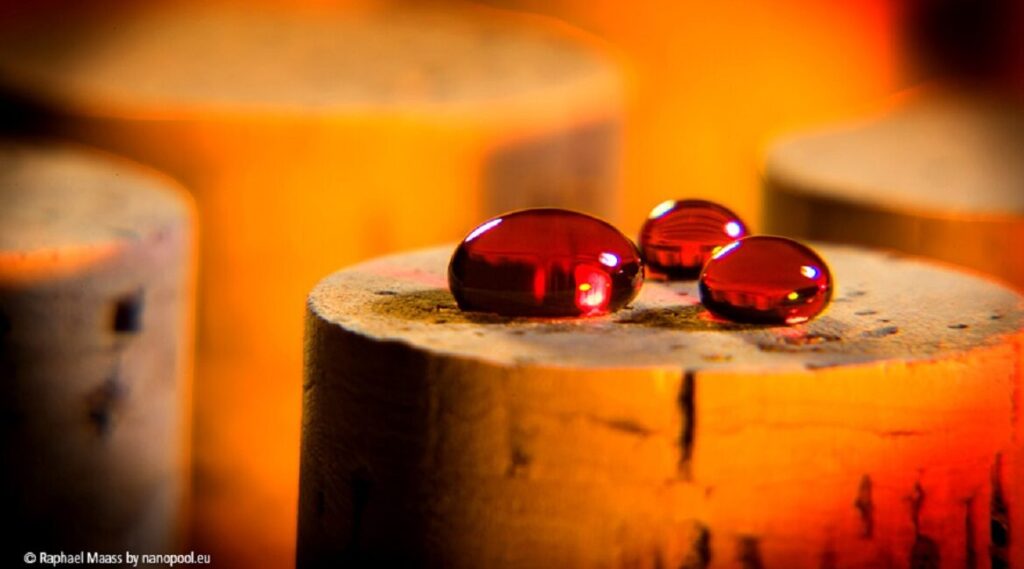
The Saarland-based company Nanopool is now offering a solution that is as simple as it is ingenious. The company has succeeded in developing an ultra-thin layer that is applied to the cork surface before bottling. The nano layer works in two ways. Firstly, it is designed to act against certain types of mould fungi that cause the cork odour. Secondly, it is designed to immobilise the phenol and chloroanisole compounds that have already formed during the cork production process, before corking, and to reduce their extraction into the wine.
As for the reliability of this method, Ralf Jürgens, Senior Engineer at Nanopool GmbH, points to numerous studies: “We have carried out microbiological tests and investigations at accredited institutes, all of which confirm the antimicrobial effect of the nanopool coating.” The coatings are easy to apply and can be used in any cork production facility or by winemakers and bottlers.
The company’s Managing Director, Sascha Schwindt, expressly points out the food-grade safety of the coating: “The product naturally meets food-grade requirements and has no influence on the maturation and taste of the wine. The layer is invisible and cannot be felt either. The feel of the cork is not altered in any way. A coated cork is not recognisable to the wine drinker.” According to the studies carried out, the bottler’s technical requirements, such as tightness, compression force, extraction force, etc., were not affected by the coating, so that no changes in processing are to be expected.
Nanopool GmbH thus offers a possible answer to the wine industry’s years-long search for alternatives to natural cork that meet the quality standards and aesthetic expectations of wine consumers.